
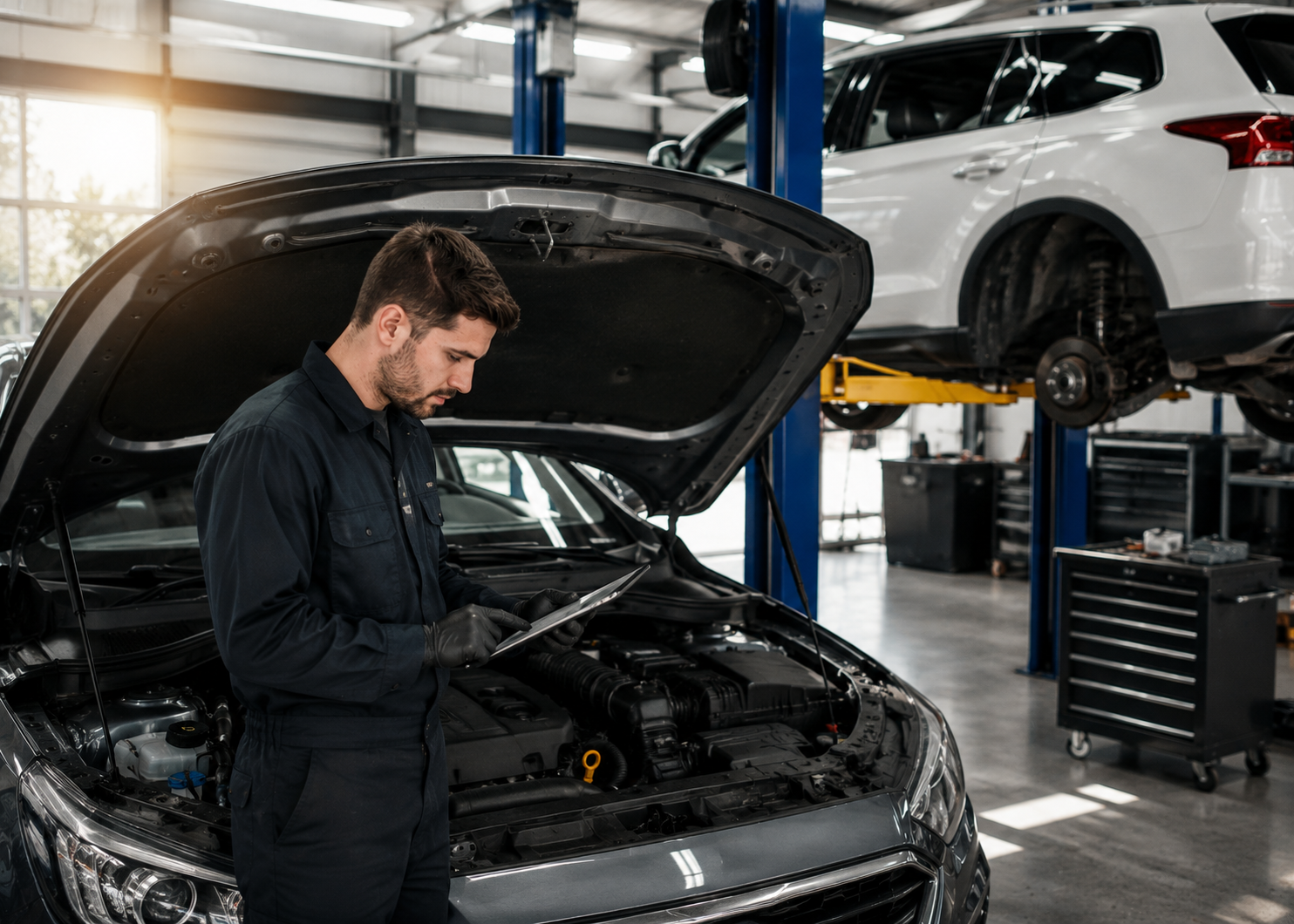
A roadworthy certificate in Lalor VIC 3075 can be an important requirement when selling a registered vehicle, re-registering a vehicle or clearing certain defect notices in Victoria. If you are searching for an RWC near Lalor, understanding what the inspection involves can help you prepare your vehicle and avoid unnecessary delays.
A Victorian roadworthy certificate confirms that a vehicle meets the applicable roadworthiness requirements at the time it is inspected. It does not mean the vehicle is mechanically perfect or guaranteed to remain roadworthy after the inspection. Transport Victoria explains that an RWC is focused on vehicle safety rather than overall mechanical reliability.
For Lalor residents, there are roadworthy testing options available in nearby Melbourne suburbs. 3D Auto Mechanic operates from Campbellfield and provides roadworthy certificate services alongside a range of mechanical repairs. The business website also identifies Campbellfield, Craigieburn, Wollert and Donnybrook among the areas it services.
This guide explains what a roadworthy certificate is, when you need one, what is checked during an RWC inspection, common reasons vehicles may fail and how to make the process easier.
What Is a Roadworthy Certificate?
A roadworthy certificate is issued after a vehicle has been inspected by a licensed vehicle tester and found to meet the applicable Victorian roadworthiness requirements.
In simple terms, the certificate confirms that the vehicle is safe enough to be used on public roads at the time of the inspection.
A roadworthy inspection focuses on safety-related components such as:
- Wheels and tyres
- Steering
- Suspension
- Brakes
- Seats and seatbelts
- Lights and reflectors
- Windscreen and windows
- Wipers and washers
- Vehicle structure
- Other applicable safety-related components
Transport Victoria states that a Certificate of Roadworthiness is certification that the vehicle meets the relevant requirements at the time of inspection and is fit for use on the road.
What an RWC does not mean
An RWC is not a guarantee that the vehicle is in perfect mechanical condition.
For example, a vehicle may have an RWC while still requiring future servicing or repairs that are outside the scope of the roadworthiness inspection.
A roadworthy certificate does not guarantee:
- Overall mechanical reliability
- A vehicle has no normal wear and tear
- Non-safety components are working
- The vehicle will remain roadworthy for the entire validity period
- The vehicle meets every aspect of the Australian Design Rules
Transport Victoria recommends arranging a separate independent vehicle inspection if you want a broader assessment of the vehicle’s overall condition and reliability.
When Do You Need a Roadworthy Certificate in Victoria?
In Victoria, a Certificate of Roadworthiness is generally required when selling a vehicle, re-registering a vehicle or clearing certain vehicle defect notices. Some vehicles and situations can be exempt, so it is important to check the requirements that apply to your particular vehicle.
An RWC may therefore be relevant if you are:
- Selling a registered car
- Transferring vehicle ownership
- Re-registering a vehicle
- Clearing certain defect notices
- Completing a registration process that requires a roadworthy certificate
Selling a registered vehicle
If you are selling a registered vehicle privately in Victoria, Consumer Affairs Victoria states that you must provide the buyer with a Certificate of Roadworthiness that is less than 30 days old.
The buyer then uses the relevant documentation for the transfer of registration.
Because requirements can change depending on the type of vehicle and transaction, always check the current Victorian requirements before making assumptions about whether an RWC is required.
Can Lalor Residents Get an RWC Nearby?
Yes. If you live in Lalor VIC 3075, you can search for an accredited roadworthy tester in nearby suburbs rather than limiting your search strictly to the Lalor postcode.
Transport Victoria provides a location tool for finding accredited roadworthy testers across Victoria.
For people searching for:
- Roadworthy certificate near Lalor
- RWC near Lalor
- Roadworthy inspection near Lalor
- Roadworthy certificate near me
- RWC inspection near me
location and convenience are often important factors.
3D Auto Mechanic is located in Campbellfield, making it a nearby option for customers in surrounding northern Melbourne suburbs.
The verified workshop address listed by the business is:
Unit 1/41–43 Merri Concourse, Campbellfield VIC 3061
The business website lists Roadworthy Certificate as one of its main automotive services. It also provides other mechanical services that may be useful if repairs are required following an inspection.
7 Essential Tips for a Stress-Free RWC
Preparing your vehicle before an inspection cannot guarantee a pass, because the licensed tester must assess the vehicle against the applicable requirements.
However, these seven practical tips can help you understand the process and identify obvious problems before your appointment.
1. Check Your Tyres and Wheels
Tyres and wheels are important safety components during a roadworthy inspection.
Before taking your vehicle for an RWC, look at your tyres for obvious signs of:
- Excessive tread wear
- Damage
- Cracks
- Uneven wear
- Deterioration
- Other visible defects
Also pay attention to the condition of the wheels and wheel components.
Transport Victoria’s roadworthiness requirements include specific standards covering wheels, wheel studs and nuts, track width and tyres.
If you are unsure about your tyre condition, having them assessed by a qualified mechanic before the inspection can help you understand whether they require attention.
2. Pay Attention to Brake Problems
Brakes are one of the most important safety systems in your vehicle.
If you have noticed a brake warning light, grinding noise, unusual vibration or reduced braking performance, do not ignore it.
The Victorian roadworthiness requirements cover several braking-related areas, including:
- Brake components
- Brake linings
- Brake discs and drums
- Stopping performance
- Parking brakes
- Warning devices
These requirements are part of the official roadworthiness inspection guidelines.
If your vehicle is showing signs of brake trouble, have the problem assessed before relying on it for an upcoming RWC.
3. Check Your Lights and Reflectors
Defective lights can create safety problems, particularly when driving at night or in poor visibility.
Before your appointment, check the vehicle’s required lights and make sure they are operating correctly.
Depending on the vehicle, this can include checking:
- Headlights
- Brake lights
- Indicators
- Number plate lights
- Other required lamps
- Reflectors
- Warning lamps where applicable
The Victorian roadworthiness requirements include lamps, signals, reflectors and warning/telltale lamps among the areas considered during testing.
A quick check before your appointment can help you identify obvious lighting problems.
4. Inspect the Windscreen and Wipers
Your ability to see the road clearly is fundamental to safe driving.
The roadworthy inspection includes the windscreen, windows, front wipers and washers.
The inspection requirements cover areas including:
- Windscreen condition
- Damage and wear
- Repairs
- Obstructions to the driver’s view
- Primary vision area
- Windscreen wipers
- Washers
- Demisters
Transport Victoria includes these areas within the official roadworthiness requirements.
If your windscreen has significant damage or your wipers are not working correctly, have the issue checked before the inspection.
5. Listen for Steering and Suspension Problems
Steering and suspension directly affect how your vehicle handles the road.
Pay attention to unusual symptoms such as:
- Knocking sounds over bumps
- Excessive movement
- Steering vibration
- Uneven handling
- Vehicle pulling unexpectedly
- Unusual noises from suspension components
The Victorian roadworthiness requirements specifically cover steering and suspension and are designed to identify excessive wear, deterioration or other safety-related issues.
If something does not feel normal when you drive, tell your mechanic before the inspection rather than assuming it will resolve itself.
6. Check Your Seatbelts and Vehicle Safety Equipment
Seatbelts are an important part of occupant safety and are included in the roadworthiness inspection.
Before your RWC appointment, make sure your seatbelts:
- Latch correctly
- Release correctly
- Retract properly
- Are not visibly damaged
- Operate as intended
The official Victorian requirements include both seats and seatbelts as inspection areas.
Other vehicle safety equipment may also be relevant depending on the vehicle and its configuration.
7. Fix Known Safety Issues Before Your Inspection
If you already know that your car has a safety-related problem, it is better to have the issue assessed before your RWC.
For example, you may already know about:
- Worn tyres
- Brake problems
- Broken lights
- Damaged windscreen
- Suspension noise
- Steering issues
- Faulty seatbelts
This does not mean you should repair every mechanical issue simply to obtain a certificate. Instead, the goal is to make sure known safety-related problems are properly assessed.
A licensed vehicle tester must inspect the vehicle against the applicable requirements.
Common Reasons a Vehicle May Fail an RWC
There is no single universal list of defects that guarantees a vehicle will fail. The result depends on the vehicle’s actual condition and the applicable Victorian roadworthiness standards.
However, problems involving the following areas can affect the inspection:
Worn tyres
Tyres showing excessive wear, damage or other safety-related defects may require attention.
Brake faults
Problems affecting braking components or stopping performance can affect roadworthiness.
Steering or suspension problems
Excessive wear, deterioration or unsafe components can result in an inspection issue.
Lighting faults
Required lights, indicators or reflectors that are not operating correctly may need repair.
Windscreen damage
Damage or other conditions affecting visibility can be relevant to roadworthiness.
Wiper and washer problems
Faulty front wipers or washers may affect the inspection.
Seatbelt issues
Seatbelts that are damaged or do not operate correctly can be a safety concern.
Structural problems
The roadworthiness requirements also cover relevant body and chassis components.
The best approach is to address known safety issues rather than trying to guess exactly what a tester will find.
What Happens If Your Vehicle Fails a Roadworthy Inspection?
If your vehicle fails its first roadworthy inspection, the licensed vehicle tester provides a report identifying the issues that need to be addressed.
You are then given a timeframe to fix the identified issues and have the vehicle checked again.
According to current Transport Victoria guidance, you have 14 days to fix the identified problems and have the vehicle checked again. If you take longer than 14 days, you will need to pay for a new test.
The process generally works like this:
Step 1: Receive the inspection result
The tester identifies the issues that prevent the vehicle from meeting the applicable requirements.
Step 2: Understand the required repairs
Ask questions if you are unsure about what needs to be repaired.
Step 3: Complete the repairs
Depending on the issue, this could involve tyres, brakes, steering, suspension, lights, windscreen components or another safety-related part.
Step 4: Arrange the required check
Once the relevant repairs are completed, the vehicle can be checked again within the applicable timeframe.
Step 5: Receive the certificate if the vehicle passes
Once the vehicle meets the relevant requirements, the Certificate of Roadworthiness can be issued.
3D Auto Mechanic states that when issues are found during its roadworthy inspection, the team can provide a report and carry out necessary repairs or replacements.
How Long Is a Roadworthy Certificate Valid?
A Victorian roadworthy certificate is current and usable for 30 days from the date it is issued. It can be used more than once for registration or transfer purposes within that period.
There is an important distinction, however.
An RWC being current for 30 days does not mean the vehicle is guaranteed to remain roadworthy for those 30 days.
For example, if a brake light stops working after the inspection, the certificate does not mean that the vehicle can ignore the new safety issue.
The certificate reflects the vehicle’s roadworthiness at the time it was inspected.
RWC vs a Full Mechanical Inspection
A roadworthy certificate and a comprehensive mechanical inspection are not the same service.
| Roadworthy Certificate | Full Mechanical Inspection |
|---|---|
| Focuses on roadworthiness and safety | Looks more broadly at vehicle condition |
| Used for specific registration/sale requirements | Useful for assessing overall mechanical condition |
| Checks applicable safety components | Can examine wider mechanical systems |
| Confirms roadworthiness at inspection time | Can identify maintenance concerns |
| Does not guarantee mechanical reliability | Provides broader condition information |
This difference is especially important if you are buying a used vehicle.
A roadworthy certificate should not be considered a substitute for an independent pre-purchase vehicle inspection.
Transport Victoria specifically states that an RWC is not an inspection of the vehicle’s mechanical quality, reliability or cosmetic condition.
How to Choose a Roadworthy Inspection Centre Near Lalor
When searching for a roadworthy certificate near Lalor VIC 3075, you may find several workshops and testing locations.
Instead of choosing purely on distance, consider a few practical factors.
Look for an accredited tester
Transport Victoria provides a location tool for finding accredited roadworthy testers. Roadworthy certificates are issued through the licensed vehicle testing system.
Consider the workshop location
A workshop in Campbellfield may be a convenient option for Lalor residents depending on your exact location and travel preferences.
Check whether repairs are available
If the vehicle requires repairs after an inspection, having access to mechanical services can simplify the process.
Look for clear communication
A professional workshop should be able to explain identified issues and the next steps clearly.
Check the services offered
A workshop that provides both RWC services and mechanical repairs may be useful if your vehicle needs attention before it can meet the applicable requirements.
Why Choose 3D Auto Mechanic for a Roadworthy Certificate Near Lalor?
3D Auto Mechanic is a Melbourne-based automotive repair facility located in Campbellfield.
The business website lists Roadworthy Certificate as one of its main services and states that it provides roadworthy inspections covering essential vehicle components such as brakes, steering, suspension and tyres.
The website also states that if a vehicle does not meet the required standards, the team can provide a report outlining the issues and carry out necessary repairs or replacements.
This combination of roadworthy testing and mechanical repair services can be useful for customers who need to address safety-related issues identified during an inspection.
3D Auto Mechanic’s listed services include:
- Roadworthy Certificate
- Mobile Mechanic
- Brake & Clutch Repair
- Auto Electrics
- Diagnostics & Computer Systems
- Glass, Window & Windscreen
- Air Conditioning
- Belts & Hoses Replacement
- Starter Motors & Alternators
- Fuel Injection, EFI & Carburettors
- Fuel Pump Repair
The business also identifies nearby areas including Craigieburn, Wollert and Donnybrook on its website.
3D Auto Mechanic location
Unit 1/41–43 Merri Concourse, Campbellfield VIC 3061
The business lists the following contact details:
Phone: 03 9042 2281
Email: info@3dautomechanic.com.au
If you are located in Lalor and need an RWC, you can contact the workshop to discuss your vehicle and inspection requirements.
Final Thoughts
Getting a roadworthy certificate in Lalor VIC 3075 does not need to be confusing.
The most important thing is to understand what an RWC is actually designed to do. A roadworthy inspection checks important safety-related components including tyres, wheels, brakes, steering, suspension, lights, seatbelts, windscreen, wipers and vehicle structure.
It does not guarantee that your vehicle is mechanically perfect or free from all future maintenance requirements.
Before your inspection, check obvious safety issues and have known problems assessed. If the vehicle fails, review the tester’s report, complete the required repairs and arrange the necessary follow-up within the applicable timeframe.
For Lalor residents searching for a roadworthy certificate near Lalor, 3D Auto Mechanic provides RWC services from its Campbellfield workshop and also offers mechanical repair services that can help address relevant vehicle issues.
Need a Roadworthy Certificate Near Lalor?
If you are looking for a roadworthy certificate near Lalor VIC 3075, contact 3D Auto Mechanic to discuss your vehicle and arrange an inspection.
3D Auto Mechanic
Unit 1/41–43 Merri Concourse
Campbellfield VIC 3061
Phone: 03 9042 2281
Mobile: 0414 668 786
Email: info@3dautomechanic.com.au
You can also visit the 3D Auto Mechanic website to learn more about its roadworthy certificate and mechanical services.